logo


24th Aug, 2021
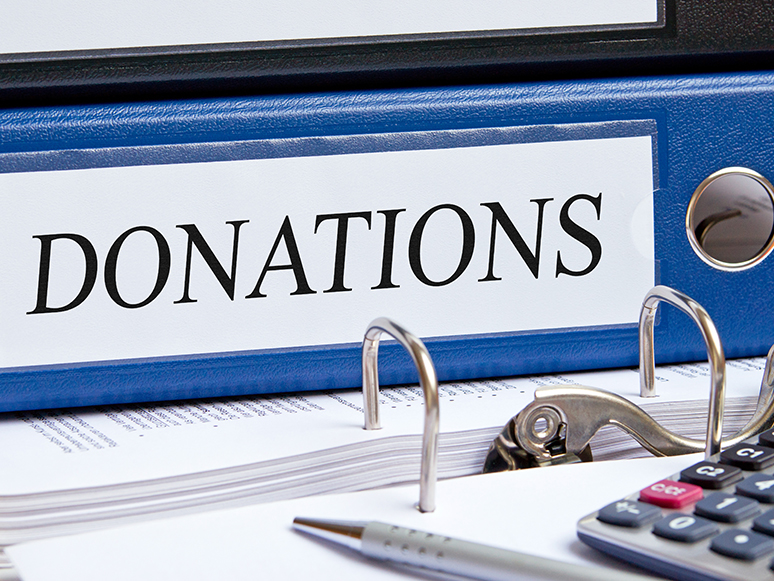
Have you made donations either through workplace giving or salary sacrifice arrangements with your employer? If so, and you want to claim a deduction in your tax return, it’s important to know that the tax treatment differs depending on which method you used to make the donation.
Essentially, workplace giving is a streamlined way for employees to regularly donate to charities and deductible gift recipients (DGRs). Usually a fixed portion of your salary is deducted from your pay each pay cycle and your employer forwards the donation on to the DGR. However, the amount of your gross salary remains the same and, depending on your employer’s payroll systems, the amount of tax you pay each pay period may or may not be reduced to take into account the donation.
On the other hand, under a typical salary sacrificing donation arrangement, you agree to have a portion of your salary donated to a DGR in return for your employer providing you with benefits of a similar value. Your gross salary is reduced by the salary sacrificed amount and the amount of tax you pay each pay period will be reduced. Your employer makes the donation to the DGR.
If you’ve made a donation under workplace giving, you can claim a deduction in your tax return. This is regardless of whether or not your employer reduced the amount of tax you paid each pay cycle to account for the amount of the donation. Your employer will give you a letter or email stating the total amount donated to DGRs, and the financial year in which the donations were made. Alternatively, your employer will provide the total amount of donations you made for the year in your tax time payment summary, under the “Workplace giving” section.
If you’ve made a donation to a DGR under a salary sacrifice arrangement, however, you’re not entitled to claim a deduction in your tax return, since it’s your employer that is making the donation to the DGR – not you.
If you make donations outside the workplace, remember that for a donation to be deductible it must be made to a DGR and truly be a gift or donation of $2 or more. You can still claim a deduction if you receive a token item in recognition of your donation (eg a lapel pin, wristband or sticker).
24th Aug, 2021

From 1 July 2021, the rate of super guarantee increased from 9.5% to 10%. Businesses using manual payroll processes should be careful that this change doesn’t lead to unintended underpayment of super, which may attract penalties.
The new rate of 10% is the minimum percentage now required by law, but employers may pay super at a higher rate under an award or agreement.
Most payroll and accounting systems will have incorporated the increase in their super rate, but it’s always good to check. If your business is still using a manual process to pay your employees, you’ll need to work out how much super to pay under the new rate.
This latest increase to 10% is by no means the last time the super guarantee rate will change over the next few years. From 1 July 2022 to 30 June 2023 (ie next financial year) the rate will increase to 10.5%, followed by another 0.5% point increase to 11% in the 2023–2024 financial year. So, employers will need to be on their toes to make sure the right amount of super guarantee is paid for the next few years.
24th Aug, 2021

If your business or employment income has been affected by recent COVID-19 related lockdowns in New South Wales, Victoria and South Australia, financial help is available from both the state and Federal governments. Depending on the length of the lockdown, businesses may be eligible to receive a co-funded small and medium business support payment, as well as various cash grants.
For small and medium businesses, depending on the length of the lockdown, the Federal government will fund up to 50% small and medium business support payments to be administered by the states.
Non-employing businesses (eg sole traders) will also be eligible.
The Federal government will also seek to make various state business grants tax exempt and provide support for taxpayers through the ATO with reduced payment plans, waiving interest charges on late payments and varying instalments on request.
For individuals, the COVID-19 Disaster Payment will be available in any state or territory where a lockdown has been imposed under a state public health order.
Eligible businesses will be able to claim state government grants under the business grants program. Smaller and micro businesses that experience a specified decline will be eligible for a payment per fortnight of restrictions.
Payroll tax waivers will be available for certain businesses, as well as payroll tax deferrals and interest free payment plans.
Commercial, retail and residential landlords who provide rental relief to financially distressed tenants will be able to claim land tax relief. Residential landlords that are not liable for land tax may be able to claim a capped grant where they reduce rent for tenants.
The NSW government will also be protecting tenants with a short-term eviction moratorium for rental arrears
where a residential tenant suffers a loss of income due to COVID-19 and meets a range of other criteria. There will also be no recovery of security bonds, lockouts or evictions of impacted retail/commercial tenants prior to mediation.
Businesses in Victoria will be provided with cash grants from the state government. These payments will be automatically made to eligible businesses and sole traders to minimise delays. The state government estimates that up to 90,000 business that previously received assistance payments in relation to previous lockdowns will receive the new cash grants.
Small and medium-sized businesses that suffer a significant loss of income or were forced to close as a result of South Australia’s seven-day lockdown are being offered an emergency cash grant as part of a $100 million business support package. The package also includes a new cash grant for eligible small businesses that don’t employ staff.
In addition, the SA government will provide fully-funded income support payments for eligible workers in regional SA who live or work outside of the Commonwealth-declared “hotspot” local government areas, and are therefore not entitled to the Federal COVID-19 Disaster Payment.
01st Jul, 2021

The Federal Government has announced a temporary COVID Disaster Payment to assist workers who live or work in a Commonwealth declared hotspot, who are unable to attend work and earn an income as a result of state-imposed health restrictions that last for longer than one week.
The payment, available for Australian citizens, permanent residents and eligible working visa holders, is up to $500 per week for recipients who lose 20 hours or more of work, and $325 per week those who lose under 20 hours of work.
Access to the payment is available through Services Australia from 8 June 2021.
01st Jul, 2021

Is your private health insurance getting more expensive every year? Part of the reason could be that the government has once again introduced legislation to freeze the related income thresholds, which were originally meant to be indexed with inflation on 1 April each year.
While the government likes to blame the funds for hikes adding to the cost of living, the reality is that the income thresholds for the private health insurance incentive have also not been indexed to keep pace with inflation since the 2014–2015 income year, and the rebate percentage is staying the same this year as for the 2019–2020 income year.
Most people with private health insurance take the private health insurance incentive in the form of reduced premiums on their cover, although it can also be taken as a tax offset.
For individuals and families with private health insurance, the rebate adjustment factor remaining the same as in the 2019–2020 income year will translate into a real-life cut in the rebated amount.
For example, private health insurance for basic (Bronze) hospital cover plus extras for two adults and two young children ranges from $300 to $600 per month. At an average figure of $450 per month, the annual cost of the insurance would equate to roughly $5,400. Assuming the adults are under 65 and earning less than $180,000 as a family, the total rebate on the yearly premium would be $1,354.
If the family applies the rebate to reduce the premiums for their cover, instead of paying $450 per month they would pay $337 per month. However, because indexation is now frozen until 1 July 2023, if private health insurance prices increase next year in line with previous average increases, the same family earning the same amount of money will end up paying more for their private health insurance, because the rebate percentage will stay the same.
The average 2021 price increase for health insurance premiums was 2.74%, the lowest increase since 2001. However, most large insurers increased their prices more, with the maximum increase by a fund listed as 5.47%. According to some figures, health insurance premiums have increased by 57% in the last decade, while the consumer price index (CPI, or inflation) has only grown by 20%.
Extending from our example, if the average price of $450 per month increases by 5% for 2022, the family will pay $22 extra per month before the rebate is applied. The total annual premium would be $5,670 and the total rebate on the yearly premium would be $1,420.
Again, if the family applies the rebate to reduce their premiums, they will end up paying $354 per month in 2022, which equates to $17 a month extra for the same policy with the same benefits, while they are earning substantially the same amount due to stagnant wages growth.
01st Jul, 2021

Over 600,000 Australian taxpayers have invested in crypto-assets in recent years. The ATO has recently issued a reminder that although many people may believe that gains made through cryptocurrency trading are tax-free, or only taxable when the holdings are cashed back into “real” Australian dollars, this is not the case – capital gains tax (CGT) does apply to crypto-asset gains or losses.
While it may appear that cryptocurrencies operate in an anonymous digital world, the ATO does closely track where these assets interact with the “real” financial world through data from banks, financial institutions and cryptocurrency online exchanges, following the money back to the taxpayer.
This year the ATO will write to around 100,000 people with cryptocurrency assets explaining their tax obligations and urging them to review their previously lodged returns. It also expects to prompt 300,000 taxpayers to report their cryptocurrency capital gains or losses as they lodge their 2021 tax returns.
Alongside these communications, the ATO is beginning a new data-matching program focused on crypto-asset transactions. It will acquire account identification and transaction data from cryptocurrency designated service providers for the 2021 financial year through to the 2023 financial year inclusively. The ATO estimates that the records relating to approximately 400,000 to 600,000 individuals will be obtained each financial year.