logo


31st Mar, 2022
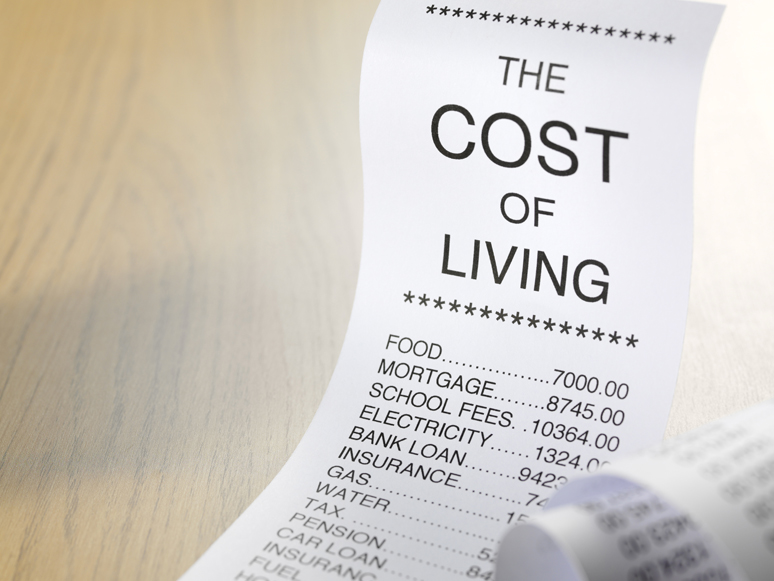
The Government will make a $250 one-off cost of living payment in April 2022 to six million eligible pensioners, welfare recipients, veterans and eligible concession card holders.
The $250 payment will be tax-exempt and not count as income support for the purposes of any Government income support. A person can only receive one economic support payment, even if they are eligible under two or more of the eligible categories.
The payment will only be available to Australian residents who are eligible recipients of the following payments, and to concession card holders:
The Government will reduce the excise and excise- equivalent customs duty rate that applies to petrol and diesel by 50% for six months. The excise and excise- equivalent customs duty rates for all other fuel and petroleum-based products, except aviation fuels, will also be reduced by 50% for six months.
The Treasurer said this measure will see excise on petrol and diesel cut from 44.2 cents per litre to 22.1 cents. Mr Frydenberg said a family with two cars who fill up once a week could save around $30 a week, or around $700 over the next six months. The Treasurer made a point of emphasising that the Australian Competition and Consumer Commission (ACCC) will monitor the price behaviour of retailers to ensure that the lower excise rate is fully passed on.
The measure will commence from 12.01 am on 30 March 2022 and will remain in place for six months, ending at 11.59 pm on 28 September 2022.
31st Mar, 2022

The Government announced two support measures for small businesses (aggregated annual turnover less than $50 million) in the form of a 20% uplift of the amount deductible for expenditure incurred on external training courses and digital technology.
External training courses
An eligible business will be able to deduct an additional 20% of expenditure incurred on external training courses provided to its employees. The training course must be provided to employees in Australia or online, and delivered by entities registered in Australia.
Some exclusions will apply, such as for in-house or on- the-job training.
The boost will apply to eligible expenditure incurred from 7:30 pm (AEDT) on 29 March 2022 until 30 June 2024.
The boost for eligible expenditure incurred by 30 June 2022 will be claimed in tax returns for the following income year. The boost for eligible expenditure incurred between 1 July 2022 and 30 June 2024, will be included in the income year in which the expenditure is incurred.
Digital adoption
An eligible business will be able to deduct an additional 20% of the cost incurred on business expenses and depreciating assets that support its digital adoption, such as portable payment devices, cyber security systems or subscriptions to cloud-based services.
An annual cap will apply in each qualifying income year so that expenditure up to $100,000 will be eligible for the boost.
The boost will apply to eligible expenditure incurred from 7:30 pm (AEDT) on 29 March 2022 until 30 June 2023.
The boost for eligible expenditure incurred by 30 June 2022 will be claimed in tax returns for the following income year. The boost for eligible expenditure incurred between 1 July 2022 and 30 June 2023 will be included in the income year in which the expenditure is incurred.
The Budget papers confirm the Treasurer’s earlier announcement that companies will be allowed to choose to have their PAYG instalments calculated based on current financial performance, extracted from business accounting software (with some tax adjustments).
The commencement date is “subject to advice from software providers about their capacity to deliver”. It is anticipated that systems will be in place by 31 December 2023, with the measure to commence on 1 January 2024, for application to periods starting on or after that date. There are no details yet as to what tax adjustments will be required (although presumably this will involve a reverse, modified form of tax effect accounting).
The Budget papers confirm the Treasurer’s earlier announcement that the GDP uplift factor for PAYG and GST instalments will be set at 2% for the 2022–2023 income year. The papers state that this uplift factor is lower than the 10% that would have applied under the statutory formula.
The 2% GDP uplift rate will apply to small to medium enterprises eligible to use the relevant instalment methods (up to $10 million annual aggregated turnover for GST instalments and $50 million annual aggregated turnover for PAYG instalments) in respect of instalments that relate to the 2022–2023 income year and fall due after the enabling legislation receives assent.
The Government has extended the measure which enables payments from certain state and territory COVID-19 business support programs to be made non-assessable, non-exempt (NANE) income for income tax purposes until 30 June 2022. This measure was originally announced on 13 September 2020.
Consistent with this, the Government has made the following state and territory grant programs eligible for this treatment since the 2021–2022 Mid-Year Economic and Fiscal Outlook:
The changes are part of an ongoing series of announcements which will continue to have effect until 30 June 2022.
31st Mar, 2022

The Budget confirms the Government’s previously announced intention to digitalise trust and beneficiary income reporting and processing.
It will allow all trust tax return filers the option to lodge income tax returns electronically, increasing pre-filling and automating ATO assurance processes. There are no other additional details in the Budget papers than in the earlier announcement.
The measure will commence from 1 July 2024 – “subject to advice from software providers about their capacity to deliver”.
The Government advises that it will consult with affected stakeholders, tax practitioners and digital service providers to finalise the policy scope, design and specifications.
The Budget confirms the Treasurer’s earlier announcement that businesses will be provided with the option to report taxable payments reporting system data on the same lodgment cycle as their activity statements, via accounting software. The rules for the taxable payments reporting system are contained in Subdiv 396-B of Sch 1 to the Taxation Administration Act 1953.
The Government will consult with affected stakeholders, tax practitioners and digital service providers to finalise the policy scope, design and specifications of the measure.
Subject to advice from software providers about their capacity to deliver, it is anticipated that systems will be in place by 31 December 2023, with the measure to commence on 1 January 2024.
31st Mar, 2022

The Budget did not announce any change to the timing of the next super guarantee (SG) rate increase. The SG rate is currently legislated to increase from 10% to 10.5% from 1 July 2022, and by 0.5% per year from 1 July 2023 until it reaches 12% from 1 July 2025.
With the SG rate set to increase to 10.5% for 2022– 2023 (up from 10%), employers need to be mindful that they cannot use an employee’s salary-sacrificed contributions to reduce the employer’s extra 0.5% of super guarantee. The ordinary time earnings (OTE) base for super guarantee purposes now specifically includes any sacrificed OTE amounts. This means that contributions made on behalf of an employee under a salary sacrifice arrangement (defined in s 15A of the Superannuation Guarantee (Administration) Act 1992) are not treated as employer contributions which reduce an employer’s charge percentage.
Super Guarantee opt-out for high-income earners
The increase in the SG rate to 10.5% from 1 July 2022 also means that the SG opt-out income threshold will decrease to $261,904 from 1 July 2022 (down from $275,000). High-income earners with multiple employers can opt-out of the SG regime in respect of an employer to avoid unintentionally breaching the concessional contributions cap ($27,500 for 2021– 2022 and 2022–2023). Therefore, the SG opt-out threshold from 1 July 2022 will be $261,904 ($27,500 divided by 0.105).
The temporary 50% reduction in minimum annual payment amounts for superannuation pensions and annuities will be extended by a further year to 30 June 2023.
The 50% reduction in the minimum pension drawdowns, which has applied for the 2019–2020, 2020–2021 and 2021–2022 income years, was due to end on 30 June 2022. However, the Government announced that the Superannuation Industry (Supervision) Regulations 1994 (SIS Regulations) will be amended to extend this temporary 50% reduction for minimum annual pension payments to the 2022– 2023 income year. Given ongoing volatility, the Government said the extension of this measure to 2022–2023 will allow retirees to avoid selling assets in order to satisfy the minimum drawdown requirements.
Minimum drawdowns reduced 50% for 2022–2023
The reduction in the minimum payment amounts for 2022–2023 is expected to apply to account-based, allocated and market linked pensions. Minimum payments are determined by age of the beneficiary and the value of the account balance as at 1 July each year under Sch 7 of the SIS Regulations.
No maximum annual payments apply, except for transition to retirement pensions which have a maximum annual payment limit of 10% of the account balance at the start of each financial year.
For the purposes of determining the minimum payment amount for an account-based pension or annuity for the financial years commencing 1 July 2019, 1 July 2020, 1 July 2021 (and 1 July 2022 proposed), the minimum payment amount is half the amount worked under the formula in clause 1 of Sch 7 of the SIS Regs. The relevant percentage factor is based on the age of the beneficiary on 1 July in the financial year in which the payment is made (or on the commencement day if the pension commenced in that year).
For market linked income streams (MLIS), the minimum payment amount for the financial years commencing 1 July 2019, 1 July 2020, 1 July 2021 (and 1 July 2022 proposed) must be not less than 45% (and not greater than 110%) of the amount determined under the standard formula in clause 1 of Sch 6 of the SIS Regs.
Note that the 50% reduction in the minimum annual pension payments are not compulsory. That is, a pensioner can continue to draw a pension at the full minimum drawdown rate or above for 2019–2020, 2020–2021, 2021–2022 (and 2022–2023 proposed), subject to the 10% limit for transition to retirement pensions. However, it will generally be inappropriate to take more than the minimum annual drawdowns in the form of a pension payment given the pension transfer balance cap. Rather, it generally makes more sense to access any additional pension amount above the minimum drawdown in the form of a partial commutation of the pension instead of taking more than the minimum annual drawdowns. This is because a commutation will generate a debit for their pension transfer balance account, while an additional pension payment above the minimum will not result in a debit.
13th Mar, 2022
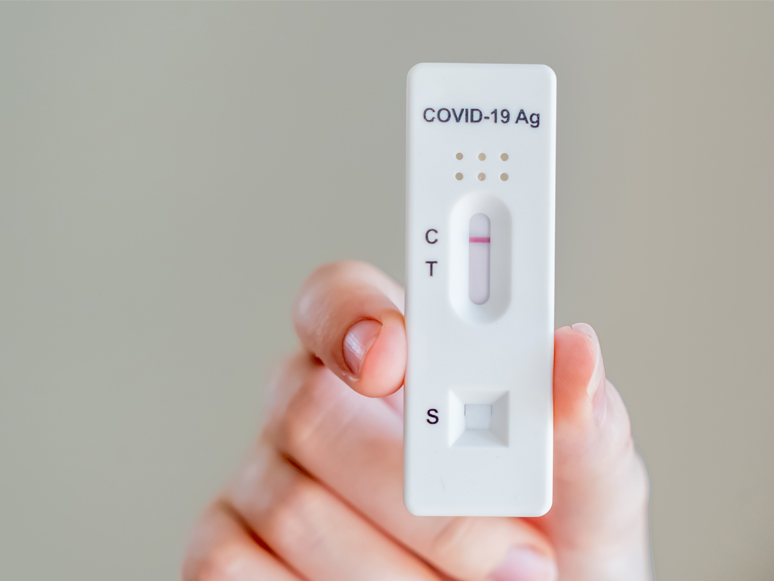
After the recent furore over the non-existent supply of rapid antigen tests (RATs) and the reduced availability of polymerase chain reaction (PCR) tests at many COVID-19 testing sites, the Federal Government is hoping for some good press with the announcement that it intends to legislate to make both PCR tests and RATs tax-deductible for individuals who buy them for a work-related purpose.
According to the government’s proposal, deductibility of tests would take effect from the beginning of the 2021–2022 tax year (that is, starting 1 July 2021) and would be ongoing. Individuals will also be able to deduct the cost of a test regardless of whether they are required to attend the workplace or have the option to work remotely. How much you might benefit from this proposal will depend on your individual tax rate and circumstances.
For businesses that can obtain enough RATs for their workforce, the government has also proposed to make COVID-19 tests provided by employers to employees exempt from FBT, if they are used for work-related purposes. This essentially means the tests would be excluded from the definition of a fringe benefit, and employers would not have to pay FBT on the costs of tests given to their employees in a work-related context.
With the Federal election fast creeping up, there doesn’t seem much time for this proposal to be introduced in Parliament and passed into law. There is also uncertainty as to whether a possible Labor government would champion this specific tax- deductibility measure, in particular due to Labor’s election pledge to provide free RATs to all Australians through Medicare.
13th Mar, 2022

The ATO has recently finalised its stance on the issue of commercial debt forgiveness – in particular, the “natural love and affection” exclusion.
A commercial debt is any debt where interest payable is deductible, or would be deductible if interest were payable, but for certain statutory restrictions. Under the commercial debt forgiveness provisions, if a taxpayer’s obligation to pay their debt is released, waived, or otherwise extinguished, the amount forgiven will be deducted from the taxpayer’s current and future tax deductions. Specifically, the amount forgiven will reduce prior-year revenue losses, prior-year net capital losses, undeducted balances of other expenditure being carried forward for deduction, and the CGT cost base of other assets held, in that order.
Given that forgiving commercial debts may mean a business will have to pay more tax, it can be advantageous if debts the business has forgiven are not captured under the commercial debt forgiveness provisions. The exclusions available include forgiveness of some debts relating to bankruptcy or by will, and a person’s forgiveness of a debt for reasons of natural love and affection for the debtor.
The natural love and affection exclusion to commercial debt forgiveness previously didn’t require the creditor who forgave a debt to be a “natural person”. This meant that a company, through its directors, could forgive the debts of an individual, giving the reason of natural love and affection for the individual, and this would not have been considered a commercial debt forgiveness, meaning a lower tax bill for the company.
In February 2019 the ATO released a draft determination which explicitly stated that the exclusion for debts forgiven for reasons of natural love and affection requires the creditor to be a natural person. This has recently been confirmed in the finalised determination.
While the ATO states that a debt-forgiving creditor must be a natural person and the object of their love and affection must be one or more other natural persons, there is no requirement that the debtor must also be a natural person. For example, this means that the exclusion could apply in circumstances where the debtor is a company, such as where a parent forgives a debt they are owed by a company that is 100% owned by their child or children.
According to the ATO, whether a creditor’s decision to forgive a debt is motivated by natural love and affection for a person needs to be determined on a case-by-case basis.