logo


16th Dec, 2025

The “payday super” legislation, now passed by Parliament, significantly changes how superannuation will be paid. From 1 July 2026, employers must pay their employees’ super contributions within seven business days of payday, replacing the quarterly system.
Up to 30 June 2026, the existing super guarantee framework with quarterly due dates continues to apply. But from the first payday on or after 1 July 2026, each pay run carries a super obligation that must be met.
Contributions will be considered “on time only” if the fund receives them within seven business days of the wage payment (an extended timeframe of 20 business days applies for some specific situations). Waiting until the end of the month or end of the quarter to “catch up” will no longer be within the law.
When errors occur, whether because of a missed pay cycle, incorrect fund details or a processing failure, the updated super guarantee charge rules will generally apply more quickly.
Small businesses using the Small Business Superannuation Clearing House will also need to choose and implement an alternative arrangement before that service closes alogether on 1 July 2026.
Otherwise, the super guarantee rate (12%) and many basic coverage rules aren’t changing. The real shift is timing and ATO enforcement.
As an employer, if you haven’t started reviewing your technology and processes in anticipation, now’s the time to start. Software providers, payment intermediaries and super funds will all face challenges.
A useful question is, “If you had to pay super every pay cycle tomorrow, could your current processes cope?” If the answer is no (or not without manual workarounds), there’s work to do. That may include confirming your payroll software calculates super correctly on each pay and whether it can generate SuperStream-compliant payment files or connect directly to a clearing house, and deciding when in the pay cycle super payments will be initiated.
Cash flow is another aspect to consider. Under payday super, many businesses will move from paying four large super instalments per year to paying many smaller instalments. Businesses with tight or seasonal cash flow may need to revisit their planning.
From 1 July 2026, employees should start seeing super contributions credited to their accounts after each pay rather than quarterly. Payslips will continue to show super guarantee amounts, and it will be easier for employees to compare payslip amounts with what appears in their super fund or myGov.
Employees will still need to keep their super fund details up to date with their employers, particularly when starting a new role, and periodically check their super statements. Beyond that, it will be up to employers to comply with payday super.
01st Oct, 2025

Are you a small business owner planning to invest in new equipment or technology? The government is planning to extend the $20,000 instant asset write-off by a further 12 months until 30 June 2026.
This measure was announced by the Treasurer as an election commitment on 4 April 2025 and is contained in a recently introduced Bill, so It’s not yet law.
Once this Bill is passed, the $20,000 threshold will apply until 30 June 2026. Without this amendment, the threshold would have dropped back to the ongoing legislated level of $1,000 from 1 July 2025.
The extension would apply to eligible depreciating assets costing less than $20,000 each; eligible amounts included in the second element of an asset’s cost (cost additions); and general small business pools (enabling full write-off where the pool balance is below $20,000 at year end).
Small businesses that use the simplified depreciation rules and have an aggregated turnover of less than $10 million can continue to immediately deduct the business portion of the cost of eligible assets first used or installed ready for use by 30 June 2026. The write- off can apply to multiple assets, provided each individual asset is under the $20,000 limit.
23rd Sep, 2023

Small businesses may be able to get a bonus 20% tax deduction for any business expenses and depreciating assets used to improve their digital operations. This includes digital enabling items such as computer software and hardware, digital media and marketing, e-commerce related goods or services, and systems or monitoring services related to cyber security. The bonus deduction applies to up to $100,000 of eligible expenditure incurred in each relevant period, with a maximum bonus deduction amount of $20,000 per income year or specified time period. This bonus deduction is available to all entities that meet the definition of a small business entity.
Any private-use portion of expenditure is not eligible for the bonus deduction. Also, the bonus deduction does not cover general operating costs related to employing staff, raising capital, construction of business premises, and the cost of goods and services the business sells. Training and education costs are also excluded, as they are specifically covered under the skills and training boost measure (which provides a separate 20% bonus deduction).
23rd Aug, 2023

Remember temporary expensing, which allowed just about every business (unless annual turnover was at least $5 billion) to immediately write off the cost of an eligible depreciating asset? Well, that is no longer available. To use temporary full expensing, you had to acquire and use, or install ready for use, an eligible depreciating business asset by 30 June 2023.
The good news for small businesses is that the instant asset write-off is still available.
Eligible businesses can claim an immediate deduction for the business portion of the cost of a depreciating asset in the year the asset is first used or installed ready for use.
Any small business that uses the simplified depreciation rules can claim the instant asset write-off. A small business is a business with an aggregated annual turnover of less than $10 million.
The instant asset write-off applies to eligible depreciating assets costing less than the specified threshold (these are called low-cost assets).
For 2023–2024, the low-cost asset threshold will be $20,000. To take advantage of the $20,000 threshold, you will need to acquire the asset and first use it, or install it ready for use, between 1 July 2023 and 30 June 2024.
The $20,000 threshold applies on a per-asset basis, so small businesses can instantly write off multiple assets. In certain circumstances, the instant asset write-off also applies to additional expenditure incurred on a low-cost asset.
09th Feb, 2021

If you own a small business still recovering from the COVID-19 induced downturn, remember that you can take advantage of FBT concessions to lower the amount of FBT you may need to pay. The concessions include exemptions for car parking in some instances, and work-related portable electronic devices.
All this could mean more cash to invest in the revitalisation and ultimate success of your business.
For small business employers, the car parking benefits provided to employees could be exempt if the parking is not provided in a commercial car park and the business satisfies the total income or the turnover test. This is the case if the business is not a government body, listed public company or a subsidiary of a listed public company.
The second exemption relates to work-related devices. Small businesses can to provide their employees with multiple work-related portable electronic devices that have substantially identical functions in the same FBT year, with all devices being exempt from FBT. Note, however, that this only applies to devices that are primarily used for work, such as laptops, tablets, calculators, GPS navigations receivers and mobile phones.
17th Nov, 2020
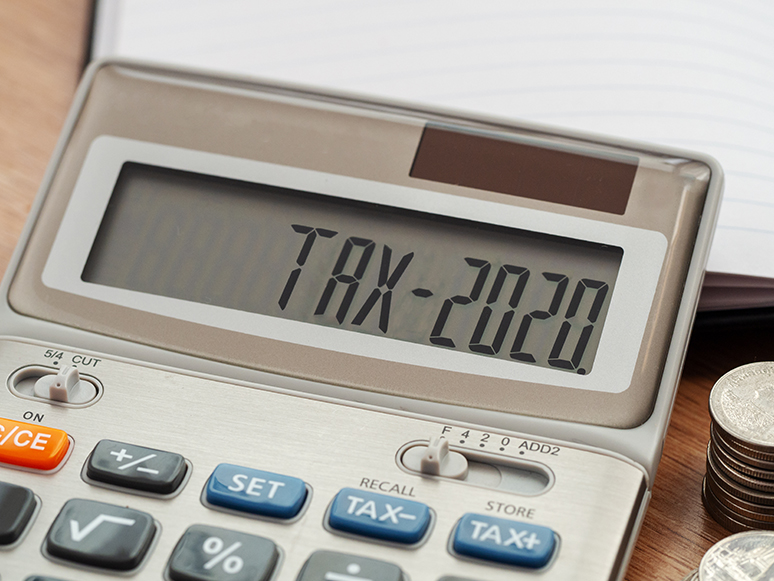
Several tax announcements from the 2020 Federal Budget have now been passed into law.
These include bringing forward changes to the personal income tax thresholds so that they apply from 1 July 2020. From that date, the top threshold of the 19% personal income tax bracket is increased from $37,000 to $45,000. The top threshold of the 32.5% tax bracket is increased from $90,000 to $120,000. The low income tax offset increases to $700 and the low and middle income tax offset (up to $1,080) is retained for 2020–2021.
A range of tax concessions already available to small businesses have been extended to medium sized businesses as well, and businesses with turnover less than $5 billion can deduct the full cost of eligible depreciating assets that are installed ready for use between 6 October 2020 and 30 June 2022.
The ATO has issued updated tax withholding schedules to reflect the 2020–2021 income year personal tax cuts. Employers must now make sure they are withholding the correct amounts for pay runs processed in their systems from no later than 16 November onwards.
With these changes coming partway through the income year, employees and other payees will receive their entitlement to the reduced tax payable for the entire 2020–2021 year when they lodge their income tax returns for that period.