logo


19th Mar, 2021

With insecure, contract and casual work becoming increasingly common, particularly in the current COVID-19 affected economy, it’s no surprise that many young and not-so-young Australians may have income from more than one job. If you are working two or more jobs casually or have overlapping contract work, you need to be careful to avoid an unexpected end of financial year tax debt.
This type of debt usually arises where a person with more than one job claims the tax-free threshold in relation to multiple employers, resulting in too little tax being withheld overall. To avoid that, you need to look carefully at how much you’ll be making and adjust the pay as you go (PAYG) tax withheld accordingly.
Currently, the tax-free threshold is $18,200, which means that if you’re an Australian resident for tax purposes, the first $18,200 of your yearly income isn’t subject to tax. This works out to roughly $350 a week, $700 a fortnight, or $1,517 per month in pay.
When you start a job, your employer will give you a tax file number declaration form to complete. This will ask whether you want to claim the tax-free threshold on the income you get from this job, to reduce the amount of tax withheld from your pay during the year.
A problem arises, of course, when a person has two or more employers paying them a wage, and they claim the tax-free threshold for multiple employers. The total tax withheld from their wages may then not be enough to cover their tax liability at the end of the income year. This also applies to people who have a regular part-time job and also receive a taxable pension or government allowance.
The ATO recommends that people who have more than one employer/payer at the same time should only claim the tax-free threshold from the employer who usually pays the highest salary or wage. The other payers will then withhold tax from your payments at a higher rate (the “no tax-free threshold” rate).
If the total tax withheld from of your employer payments is more than needed to meet your year-end tax liability, the withheld amounts will be credited to you when your income tax return is lodged, and you’ll get a tax refund. However, if the tax withheld doesn’t cover the tax you need to pay, you’ll have a tax debt and need to make a payment to the ATO.
09th Feb, 2021

With a range of government COVID-19 economic supports such as the JobKeeper and JobSeeker schemes winding down in the next few months, businesses that are seeking to employ additional workers but still need a bit of help can now apply for the JobMaker Hiring Credit Scheme. Unlike the JobKeeper Payment, where the money has to be passed onto your employees, the JobMaker Hiring Credit is a payment that your business gets to keep. Depending on new employees’ ages, eligible businesses may be able to receive payments of up to $200 a week per new employee.
To be eligible for the scheme, you need to satisfy the basic conditions of operating a business in Australia, holding an ABN, and being registered for PAYG withholding. Your business will also need to be up to date with its income tax and GST obligations for two years up to the end of the JobMaker period you claim for, and satisfy conditions for payroll amount and headcount increases. Non-profit organisations and some deductible gift recipients (DGRs) may also be eligible.
Beware, however, that businesses receiving the JobKeeper Payment cannot claim the JobMaker Hiring Credit for the same fortnight.
For example, businesses that wish to claim the payment for the first JobMaker period must not have claimed any JobKeeper payments starting on or after 12 October 2020, and employers currently claiming other wage subsidies – including those related to apprentices, trainees, young people and long-term unemployed people – cannot receive the JobMaker subsidy for the same employee.
If you think your business may be eligible, the next step is to determine whether you are employing eligible additional employees.
Generally, the employee needs to:
Since the aim of JobMaker is to subsidise an increase in the number of employees a business hires – not to reduce the cost of replacing employees – businesses wishing to claim the payment must also demonstrate increases in both in headcount and employee payroll amount.
This is meant to reduce instances of rorting by businesses that might replace existing non-eligible employees with eligible employees. Employers will need to send information such as their baseline headcount and payroll amounts to the ATO for compliance purposes.
01st Dec, 2020

On 10 November 2020, the ATO advised that the recent reduction in the company tax rate had not been applied correctly in its systems from 1 July 2020. The error, which resulted in pay-as-you-go (PAYG) instalments being calculated using the former rate of 27.5% and not the correct 26%, affected companies that are base rate entities with an aggregated turnover of less than $50 million.
The ATO has now corrected the error and will issue a new PAYG instalment letter to affected companies reflecting their correct instalment rate or amount.
The ATO says that all future activity statements will have the correct rate applied.
If you have varied your instalment rate or amount, the variation will continue until the start of the next income year. You can continue to vary your activity statements if your rate or amount does not reflect your current trading situation.
If you have lodged your activity statements and paid an amount based on the incorrect instalment calculation, the ATO will refund the overpaid amount shortly. No further action is needed.
When you lodge:
15th Jul, 2020
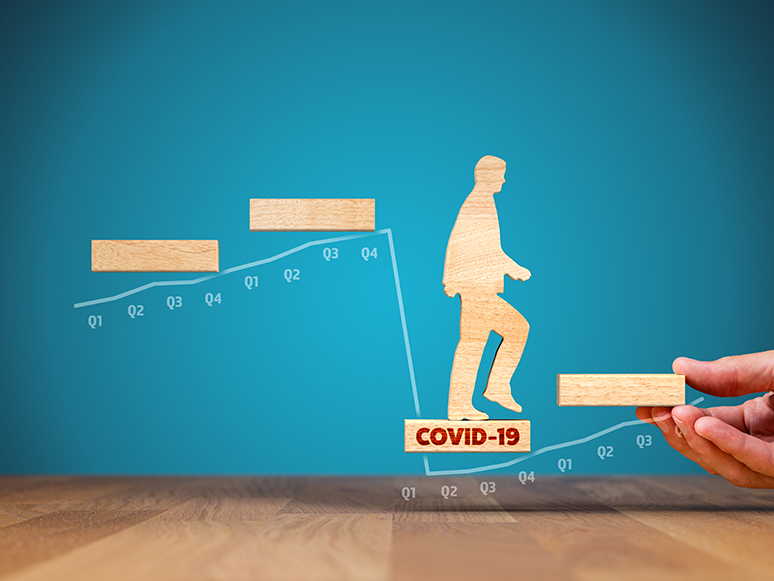
If your business is one of many that received the initial cash flow boosts as a part of the government’s COVID-19 economic stimulus measures, prepare for more help coming your way. When you lodge your monthly or quarterly activity statements for June to September 2020, your business will receive additional cash flow boosts.
Generally, the additional amount will be equal to the total amount that you initially received and will be split evenly between the lodged activity statements.
Quarterly payers will generally receive 50% of their total initial cash flow boost for each activity statement, while monthly payers will generally receive 25% of their total initial cash flow boost for each activity statement.
However, if you’ve made adjustments or revised your activity statements after lodgment, the amount of additional cash flow boost payments you receive may be different.
Remember, if you haven’t made payments to employees subject to withholding, you need to report zero for PAYG withholding when lodging your activity statements to ensure you receive the additional cash flow boost payments. It’s important that you don’t cancel PAYG withholding registration until you have received the additional cash flow boosts.