logo


13th Mar, 2022
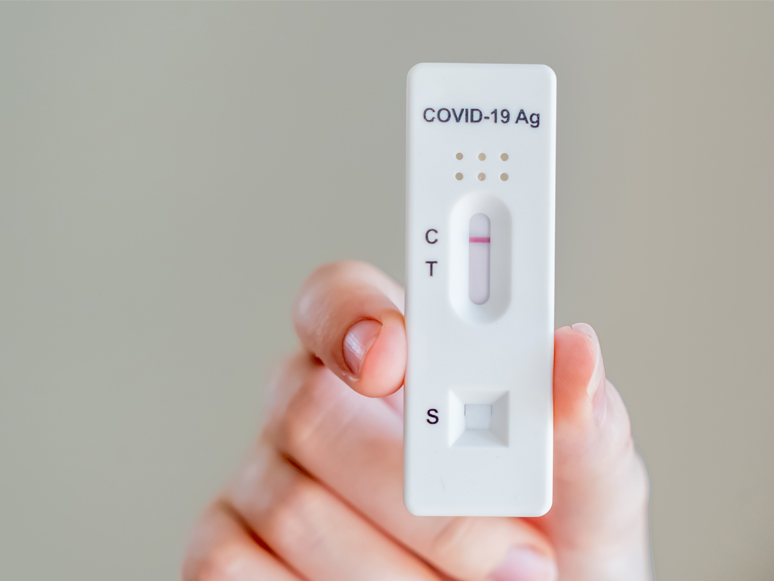
After the recent furore over the non-existent supply of rapid antigen tests (RATs) and the reduced availability of polymerase chain reaction (PCR) tests at many COVID-19 testing sites, the Federal Government is hoping for some good press with the announcement that it intends to legislate to make both PCR tests and RATs tax-deductible for individuals who buy them for a work-related purpose.
According to the government’s proposal, deductibility of tests would take effect from the beginning of the 2021–2022 tax year (that is, starting 1 July 2021) and would be ongoing. Individuals will also be able to deduct the cost of a test regardless of whether they are required to attend the workplace or have the option to work remotely. How much you might benefit from this proposal will depend on your individual tax rate and circumstances.
For businesses that can obtain enough RATs for their workforce, the government has also proposed to make COVID-19 tests provided by employers to employees exempt from FBT, if they are used for work-related purposes. This essentially means the tests would be excluded from the definition of a fringe benefit, and employers would not have to pay FBT on the costs of tests given to their employees in a work-related context.
With the Federal election fast creeping up, there doesn’t seem much time for this proposal to be introduced in Parliament and passed into law. There is also uncertainty as to whether a possible Labor government would champion this specific tax- deductibility measure, in particular due to Labor’s election pledge to provide free RATs to all Australians through Medicare.
10th Feb, 2022

Amidst the Omicron COVID-19 wave and with our governments shortening booster dose intervals, many businesses are encouraging their employees and customers to get either vaccinated or get their booster dose by offering rewards or incentives. While this is an effective way to help employees and customers stay safe and businesses to stay open, it’s important to consider that there may be some tax consequences involved.
If your business provides free or discounted goods, services, vouchers, gift cards, rewards points or other non-cash benefits to everyone who has had their COVID-19 vaccinations, those benefits will not be subject to FBT, even if your employees take part in the program. This is because the benefit isn’t provided in respect of your employees’ employment. Providing these types of non-cash benefits only to your employees may be subject to FBT; however, a benefit with a value under $300 may qualify for a minor benefit exemption.
If a non-cash benefit provided to your employees doesn’t qualify for the minor benefit exemption, a reduction in taxable value of FBT may be available if the benefit is an “in-house” one. Generally, an in-house benefit is something identical or similar to the benefits you provide to customers in the ordinary course of business – for example, clothes given by a clothing retailer.
If you give your employees a cash payment for getting vaccinated, your business will need to report it via Single Touch Payroll (STP) as part of each employee’s salary or wages, withhold tax from the amount under PAYG withholding, and include the amount in each employee’s ordinary time earnings for the purposes of determining super contributions.
30th Apr, 2021
If your business has provided any benefits to your employees, you may be liable for fringe benefits tax (FBT). This includes benefits to current, prospective and former employees,as well as their associates. It’s important to keep in mind that this applies no matter what structure your business has – sole trader, partnership, trustee, corporation, unincorporated association, etc. If a benefit was provided in respect of employment, then it may be a taxable fringe benefit.
Although the Australian income tax year runs from 1 July to 30 June, the FBT year is different, running from 1 April to 31 March the following year – so now is the time to consider your business’s FBT obligations and organise your records for the year 1 April 2020 to 31 March 2021.
In total, there are 13 different types of taxable fringe benefits, each with their own specific valuation rules. The FBT tax rate of 47% may seem fearsome, but there are ways to reduce the amount of FBT your business may have to pay where a benefit has been provided.
One of the simplest ways to reduce the amount of your business’s FBT liability is for your employees to make payments towards the cost of providing the fringe benefit. This is known as employee contribution, and certain conditions still apply.
Your business can also take advantage of various exemptions and concessions to reduce FBT liability, but you’ll need to keep specific and careful records, including employee declarations and invoices and receipts. As a general rule, you should keep these documents for at least five years after the relevant FBT return is lodged.
17th Oct, 2020

The ATO has updated its COVID-19 and fringe benefits tax (FBT) advice, providing a useful outline of some issues that may arise due to an employer’s response to COVID-19.
Items provided to employees to allow them to work from home (or otherwise offsite) due to COVID-19 will usually be exempt from FBT if they are primarily used by employees for work.
Also, the minor benefits exemption or the otherwise deductible rule may apply if an employer:
The minor benefits exemption may apply for minor, infrequent and irregular benefits under $300.
In addition, the otherwise deductible rule may allow an employer to reduce the taxable value of benefits by the amount that an employee can claim as a once-only deduction.
Employers may have been garaging work cars at their employees’ homes due to COVID-19. There may not be an FBT liability depending on:
Employees’ driving patterns may have changed due to the effects of COVID-19. If an employer uses the operating cost method, it may have an existing logbook. If so, the employer can still rely on this logbook to make a reasonable estimate of the business kilometres travelled. However, the employer can also choose to keep a new logbook that is representative of its business use throughout the year.
The issue of logbooks is also addressed in more detail in the COVID-19 and car fringe benefits fact sheet.
There is also a separate ATO fact sheet on these matters.
An employer will not have to pay FBT if it provides emergency accommodation, food, transport or other assistance to an employee where:
An employer will also not have to pay FBT for benefits that are considered “emergency assistance”.
An employer may need to pay FBT on items it gives employees to help protect them from contracting COVID-19 while at work. These include gloves, masks, sanitisers and antibacterial spray.
The ATO says, however, that these benefits are exempt from FBT under the emergency assistance exemption if employers provide them to employees who:
Where employment duties are not of this kind, the minor benefits exemption may apply if an employer provides an employee with minor, infrequent and irregular benefits under the value of $300.
There is a limited exemption from FBT if an employer provides emergency health care to an employee who us affected by COVID-19.
If an employer pays for its employee’s ongoing medical or hospital expenses, FBT applies. However, if an employer pays to transport an employee from the workplace to seek medical help, that cost is exempt from FBT.
Providing flu vaccinations to employees is generally exempt from FBT because it is work-related preventative health care.
COVID-19 testing also qualifies for the FBT exemption for work-related medical screening, under ceration conditions.
An employer will not have to pay FBT if it is required to pay non-refundable costs for cancelled events that its employees were due to attend.
However, an employer may have to pay FBT if its employees were required to pay for their attendance at the cancelled event and the employer reimbursed them. This would be an expense payment fringe benefit – unless the otherwise deductible rule applies.
12th Jun, 2020
11th Apr, 2020
A series of administrative measures to assist businesses experiencing financial difficulty as a result of the COVID-19 pandemic has been announced by the ATO. These include deferring the payment date and amounts due on Business Activity Statements (BASs), income tax assessments, FBT assessments and excise by up to four months. Businesses will also be allowed to change payment and reporting cycles for GST and vary PAYG instalment amounts. Any interest or penalties applied to tax liabilities incurred after 23 January 2020 may be remitted.
The measures that will apply are similar to those for taxpayers affected by the recent Australian bushfires. However, one important point of difference is that while the bushfire measures applied automatically to particular geographical areas, assistance for those impacted by COVID-19 will not be automatically implemented. Taxpayers who have been affected will need to contact the ATO to discuss their situation in order to come up with a tailored support plan.
The ATO has also clarified that emergency accommodation, food, transport, medical or other assistance provided by employers to employees affected by COVID-19 may be exempt from FBT, depending on the circumstances. However, employers will still need to meet their ongoing super guarantee obligations for their employees. The ATO says that by law, it cannot vary the contribution due date or waive the superannuation guarantee charge where super guarantee payments are late or unpaid.