logo


07th Sep, 2021
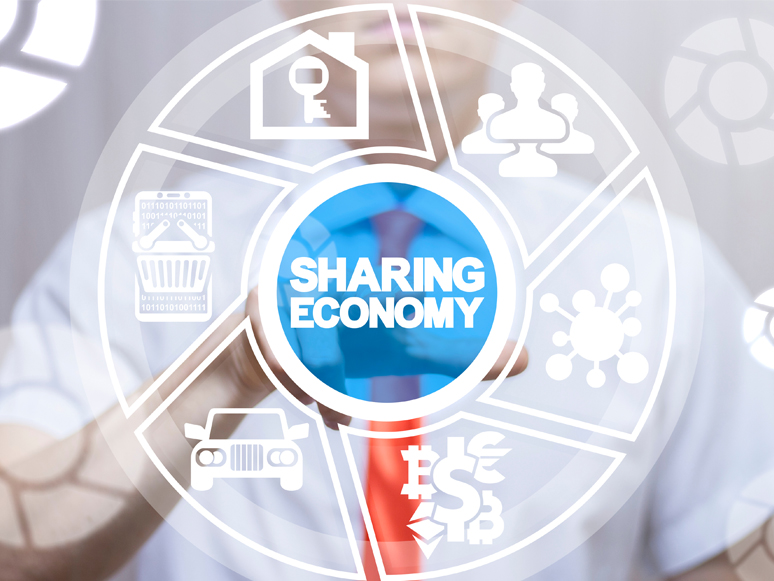
The government is seeking to legislate compulsory reporting of information for sharing economy platforms in order to more easily monitor the compliance of participants, while at the same time reducing the need for ATO resources.
As the sharing economy becomes more prevalent and fundamentally reshapes many sectors of the economy, the government is scrambling to contain the fall-out. While there no standard definition of the term “sharing economy”, it’s usually taken to involve two parties entering into an agreement for one to provide services, or to loan personal assets, to the other in exchange for payment. Examples of platforms include Uber, Airbnb, Car Next Door, Menulog, Airtasker and Freelancer, to name a few.
With the rapid expansion of various sharing economy platforms, the government’s Black Economy Taskforce has noted that without compulsory reporting, it is difficult for the ATO to gain information on compliance without undertaking targeted audits. Putting formal reporting requirements in place will align Australia with international best practice.
The government has now released draft legislation for consultation to define the scope of compulsory reporting requirements in order to ensure integrity of the tax system and reduce the compliance burden on the ATO.
This new compulsory reporting regime would apply to all operators of an electronic service, including websites, internet portals, apps, gateways, stores and marketplaces. Any platforms that allow sellers and buyers to transact will be required to report information on certain transactions. However, the reporting requirement will generally not apply if the transaction only relates to supply of goods where ownership of the goods is permanently changed, where title of real property is transferred, or the supply is a financial supply.
Based on the draft legislation, platform operators will be required to report transactions that occur on or after 1 July 2022 if they relate to a ride-sourcing or a short-term accommodation service, unless an exemption applies. From 1 July 2023 all other categories of sharing economy platforms will be required to report, unless an exemption applies.
The initial reporting is expected to be biannual (1 July to 31 December, and 1 January to 30 June) with electronic service operators required to report the relevant information by 31 January and 31 July respectively.
Reminder: super changes for the 2021 financial year
The government’s long-slated “flexibility in superannuation” legislation is finally law. This means from 1 July 2021, individuals aged 65 and 66 can now access the bring-forward arrangement in relation to non-concessional super contributions. The excess contributions charge will be removed for anyone who exceeds their concessional contributions cap, and individuals who received a COVID-19 super early release amount can now recontribute it without hitting their non-concessional cap.
Previously, if you made super contributions above the annual non-concessional contributions cap, you could automatically access future year caps if you were under 65 at any time in the financial year.
The bring-forward arrangement allows you to make non-concessional contributions of up to three times the annual non-concessional contributions cap in that financial year.
Previously, individuals who exceeded their concessional contributions cap would have to pay the excess contributions charge (around 3%) as well as the additional tax due when excess contributions were re-included in their assessable income. However, people who exceed their cap on or after 1 July 2021 will no longer pay the charge, but will still receive a determination and be taxed at their marginal tax rate on any excess concessional contributions amount, less a 15% tax offset to account for the contributions tax already paid by their super fund.
Under the COVID-19 early release measures, individuals could apply to have up to $10,000 of their super released during the 2019–2020 financial year and another $10,000 released between 1 July and 31 December 2020. Between 20 April 2020 and 31 December 2020, the ATO received 4.78 million applications for early release, totalling $39.2 billion worth of super.
Not everyone who applied to have super released ended up needing to use it once the government ramped up its financial support programs. From 1 July 2021, people who received a COVID-19 super early release amount can recontribute to their super up to the amount they released, and those recontributions will not count towards their non-concessional contributions cap. The recontribution amounts must be made between 1 July 2021 and 30 June 2030 and super funds must be notified about the recontribution either before or at the time of making the recontribution.
24th Aug, 2021
The ATO has a range of year-end tax time options to support taxpayers who have been affected by the COVID-19 pandemic and recent natural disasters.
Income statements can be accessed in ATO online services through myGov accounts from 14 July.
The ATO also reminds those who may have lost, damaged or destroyed tax records due to natural disasters that some records can be accessed through their myGov account or their registered tax agent. For lost receipts, the ATO can accept “reasonable claims without evidence, so long as it’s not reasonably possible to access the original documents”. A justification may be required on how a claim is calculated.
Payments received as an employee will be automatically included in the employee’s income statement as either salary and wages or as an allowance. However, sole traders who received JobKeeper payment on behalf of their business will need to include the payment as assessable income for the business.
Payments received will be automatically included in the tax return at the Government Payments and Allowances question from 14 July.
Employees receiving one-off or regular payments from their employer after being temporarily stood down due to COVID-19 should expect to see those payments automatically included in their income statement as part of their tax return.
The Australian Government (through Services Australia) COVID-19 Disaster Payment for people affected by restrictions is taxable. Taxpayers are advised to ensure they include this income when lodging their returns.
The tax treatment of assistance payments can vary; the ATO website outlines how a range of disaster payments impact tax returns and includes guidance on COVID-19 payments, including the taxable pandemic leave disaster payment.
Early access to superannuation under the special arrangements due to COVID-19 is tax free and does not need to be declared in tax returns.
24th Aug, 2021
If your business is experiencing financial difficulties due to the latest lockdowns, the ATO may be able to help by processing your tax return faster and expediting the release of any refund to you. To be eligible for priority processing, you’ll need to apply to the ATO and provide supporting documents (within four weeks of your submission) outlining your circumstances. “Financial difficulty” may include many situations such as disconnection of an essential service, pending legal action or repossession of a business vehicle.
You can apply for ATO priority processing over the phone or through your tax professional after the lodgment of the tax return in question. Once the initial request for priority processing is received, you’ll be notified and contacted if more information is required. Processing will take more time for businesses that have lodged several years’ worth of income tax returns of amendments at the same time, and those that have unresolved tax debts.
Before lodging any priority processing request, check the progress of your return through online services, over the phone or by contacting us as your tax professional. If the return is in the final stages of processing, you may not need to lodge a priority processing request – the return will be finalised before the ATO has an opportunity to consider the request.
24th Aug, 2021

If your business or employment income has been affected by recent COVID-19 related lockdowns in New South Wales, Victoria and South Australia, financial help is available from both the state and Federal governments. Depending on the length of the lockdown, businesses may be eligible to receive a co-funded small and medium business support payment, as well as various cash grants.
For small and medium businesses, depending on the length of the lockdown, the Federal government will fund up to 50% small and medium business support payments to be administered by the states.
Non-employing businesses (eg sole traders) will also be eligible.
The Federal government will also seek to make various state business grants tax exempt and provide support for taxpayers through the ATO with reduced payment plans, waiving interest charges on late payments and varying instalments on request.
For individuals, the COVID-19 Disaster Payment will be available in any state or territory where a lockdown has been imposed under a state public health order.
Eligible businesses will be able to claim state government grants under the business grants program. Smaller and micro businesses that experience a specified decline will be eligible for a payment per fortnight of restrictions.
Payroll tax waivers will be available for certain businesses, as well as payroll tax deferrals and interest free payment plans.
Commercial, retail and residential landlords who provide rental relief to financially distressed tenants will be able to claim land tax relief. Residential landlords that are not liable for land tax may be able to claim a capped grant where they reduce rent for tenants.
The NSW government will also be protecting tenants with a short-term eviction moratorium for rental arrears
where a residential tenant suffers a loss of income due to COVID-19 and meets a range of other criteria. There will also be no recovery of security bonds, lockouts or evictions of impacted retail/commercial tenants prior to mediation.
Businesses in Victoria will be provided with cash grants from the state government. These payments will be automatically made to eligible businesses and sole traders to minimise delays. The state government estimates that up to 90,000 business that previously received assistance payments in relation to previous lockdowns will receive the new cash grants.
Small and medium-sized businesses that suffer a significant loss of income or were forced to close as a result of South Australia’s seven-day lockdown are being offered an emergency cash grant as part of a $100 million business support package. The package also includes a new cash grant for eligible small businesses that don’t employ staff.
In addition, the SA government will provide fully-funded income support payments for eligible workers in regional SA who live or work outside of the Commonwealth-declared “hotspot” local government areas, and are therefore not entitled to the Federal COVID-19 Disaster Payment.
01st Jul, 2021

Over 600,000 Australian taxpayers have invested in crypto-assets in recent years. The ATO has recently issued a reminder that although many people may believe that gains made through cryptocurrency trading are tax-free, or only taxable when the holdings are cashed back into “real” Australian dollars, this is not the case – capital gains tax (CGT) does apply to crypto-asset gains or losses.
While it may appear that cryptocurrencies operate in an anonymous digital world, the ATO does closely track where these assets interact with the “real” financial world through data from banks, financial institutions and cryptocurrency online exchanges, following the money back to the taxpayer.
This year the ATO will write to around 100,000 people with cryptocurrency assets explaining their tax obligations and urging them to review their previously lodged returns. It also expects to prompt 300,000 taxpayers to report their cryptocurrency capital gains or losses as they lodge their 2021 tax returns.
Alongside these communications, the ATO is beginning a new data-matching program focused on crypto-asset transactions. It will acquire account identification and transaction data from cryptocurrency designated service providers for the 2021 financial year through to the 2023 financial year inclusively. The ATO estimates that the records relating to approximately 400,000 to 600,000 individuals will be obtained each financial year.
01st Jul, 2021
Businesses that have accessed government economic stimulus measures need to take extra care this tax time. The ATO has announced that it will increase its scrutiny, conducting compliance activity on various economic stimulus measures introduced to help businesses recover from the effects of COVID-19.
These stimulus measures include loss carry-back, temporary full expensing and accelerated depreciation.
While the ATO will continue to support businesses, most of whom are doing the right thing, it is looking at behaviour or development of schemes designed to deliberately exploit various stimulus measures. All taxpayers who’ve used the schemes should review their claims to ensure they are eligible, and that the amounts claimed are correct.
The loss carry-back measure allows eligible corporate entities to claim a refundable tax offset in their 2020– 2021 and 2021–2022 company tax returns. In essence, companies get to “carry back” losses to earlier years in which there were income tax liabilities, which may result in a cash refund or a reduced tax liability.
The temporary full expensing measure allows immediately deducting the business portion of the cost of eligible new depreciating assets or improvements. Eligible businesses also have access to the accelerated depreciation measure for the 2019–2020 and 2020–2021 income years, in which the cost of new depreciating assets can be deducted at an accelerated rate.
The ATO will review claims as part of its tax time compliance activities as well as actively identifying tax schemes and arrangements seeking to exploit those schemes. The ATO will actively pursue concerning or fraudulent behaviours, including imposing financial penalties, prosecution and imprisonment for the most serious of cases.